







AI Image Generator
Flowith AI
Flowith AI is a next-gen, canvas-based AI workspace that uses infinite, autonomous agents to visually orchestrate complex, multi-step tasks like research, content creation, and automation on a boundless 2D interface. You can also use related image and video generation features on Cuty AI.
Key Features
Discover what makes Flowith Ai exceptional
Infinite Canvas Workspace
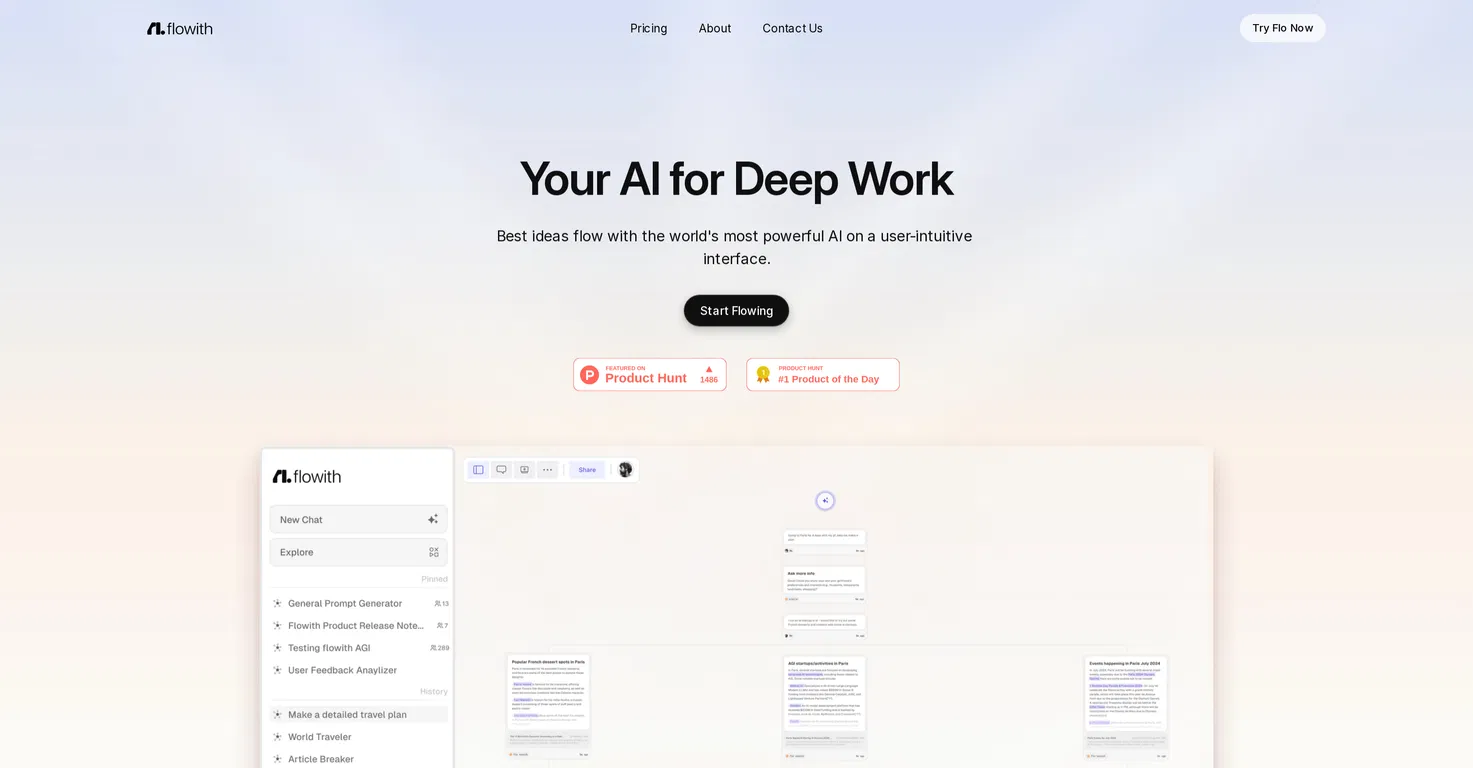
Flowith AI replaces linear chat interfaces with a boundless 2D workspace where prompts, responses, and generated items are movable nodes for visual organization. This infinite canvas allows you to organize complex projects spatially, creating visual workflows that make it easy to see connections, dependencies, and progress across multiple tasks. Unlike traditional chat-based AI tools, the canvas interface lets you arrange information visually, build upon previous work, and maintain context across long, complex projects. This spatial organization is particularly powerful for research, content creation, and project management tasks that benefit from visual thinking and non-linear workflows.
Autonomous Agents (Neo)
Flowith AI features autonomous agents called Neo that run continuously, breaking down and executing complex tasks with tool integration and self-optimization. These agents work independently to plan, research, build, and execute multi-step workflows without constant human intervention. Unlike chatbots that simply provide text responses, Neo agents actively perform work, integrating with various tools and services to accomplish tasks autonomously. The agents can break down complex projects into manageable steps, execute them systematically, and optimize their approach based on results. This agent-orchestrated approach transforms AI from a simple assistant into an active collaborator that can handle sophisticated, multi-step projects.

Knowledge Integration & Context Awareness
Flowith AI connects personal knowledge and tools for precise, context-aware outputs that understand your specific needs and preferences. The platform can integrate with your existing knowledge bases, documents, and tools, allowing the AI to work with your specific context and information. This integration ensures that the AI understands your domain, preferences, and requirements, producing outputs that are tailored to your needs rather than generic responses. The knowledge integration feature is particularly valuable for researchers, content creators, and professionals who need AI assistance that understands their specific field, style, or requirements, making the platform more effective for specialized work.

Multi-Modal & Deep Work Focus
Flowith AI is multi-modal and tool-agnostic, working with various AI models and tools while supporting text, images, and more within a single flow. The platform is designed to help users stay in a flow state for sustained productivity on complex projects, not just quick answers. This deep work focus makes Flowith ideal for creators, researchers, project managers, and developers who need to work on sophisticated, multi-step projects that require sustained attention and complex orchestration. The combination of visual organization, autonomous agents, and multi-modal capabilities creates a powerful environment for tackling challenging work that goes beyond simple question-and-answer interactions.
Frequently Asked Questions
Everything you need to know about Flowith Ai
Flowith AI is a next-gen, canvas-based AI workspace that goes beyond simple chatbots, using infinite, autonomous agents like Neo to visually orchestrate complex, multi-step tasks like research, content creation, and automation on a boundless 2D interface, blending human creativity with AI execution for deep work. It's a powerful tool for creators, researchers, and developers to build dynamic workflows, integrate knowledge, and generate sophisticated outputs, acting like a visual, agent-powered workspace that combines the organizational benefits of tools like Notion and Miro with truly autonomous, multi-step AI execution capabilities.
Flowith AI differs from traditional chatbots in several key ways: it uses a spatial, infinite canvas interface instead of linear chat conversations, allowing visual organization of complex projects. The platform features autonomous agents called Neo that actively perform work rather than just providing text responses, breaking down and executing complex tasks with tool integration. Flowith is designed for deep work on complex, multi-step projects rather than quick answers, combining visual organization with autonomous AI execution. Unlike chatbots that provide isolated responses, Flowith maintains context across long projects and allows you to build upon previous work visually, making it more suitable for sophisticated workflows.
Autonomous agents called Neo in Flowith AI are sophisticated AI systems that run continuously, breaking down and executing complex tasks with tool integration and self-optimization. Unlike chatbots that simply provide text responses, Neo agents actively perform work, integrating with various tools and services to accomplish tasks autonomously. The agents can break down complex projects into manageable steps, execute them systematically, plan research, build solutions, and optimize their approach based on results. This agent-orchestrated approach transforms AI from a simple assistant into an active collaborator that can handle sophisticated, multi-step projects without constant human intervention, making Flowith ideal for complex work that requires sustained execution.
Flowith AI is best suited for complex, multi-step projects that benefit from visual organization and autonomous execution, including research projects that require gathering and synthesizing information from multiple sources, content creation workflows that involve planning, research, writing, and refinement, automation tasks that require orchestrating multiple steps and tools, project management for complex initiatives with multiple dependencies, and development work that involves planning, coding, testing, and iteration. The platform is ideal for creators, researchers, project managers, and developers who need to work on sophisticated projects that go beyond simple question-and-answer interactions and require sustained attention, complex orchestration, and visual thinking.
The infinite canvas workspace in Flowith AI helps with productivity by allowing visual organization of complex projects, making it easy to see connections, dependencies, and progress across multiple tasks. Unlike linear chat interfaces, the canvas lets you arrange information spatially, build upon previous work, and maintain context across long projects. This spatial organization supports non-linear thinking and workflows, which is particularly powerful for research, content creation, and project management. The visual interface helps you stay in a flow state for sustained productivity on complex projects, as you can see your entire project at once, understand relationships between different elements, and work more intuitively than with traditional text-based interfaces.