GPT Image 2 vs Nano Banana 2: A Head-to-Head Image Quality Comparison
Google DeepMind launched Nano Banana 2 (Gemini 3.1 Flash Image) on February 26, 2026. OpenAI followed with GPT Image 2 on April 21, 2026, and within twelve hours it took the #1 spot on the LMArena image leaderboard with a +242 Elo lead — the widest margin the board has ever recorded. Both models claim to be the best AI image generator available right now.
We ran both through the same set of prompts across six image quality dimensions. For each test, we generated examples with each model independently using identical prompts. Here is what we found.
1. Photorealistic Portrait
Photorealistic portraits test a model's ability to handle skin texture, lighting direction, depth of field, and facial feature accuracy. This is one of the most demanding benchmarks for image generation quality.
Nano Banana 2
Nano Banana 2 produces portraits with vibrant lighting and a polished, editorial look. The model leans into slightly more saturated skin tones and elevated contrast, giving outputs a commercial-photography feel. Hair detail and fine facial features — eyelashes, pore texture, subtle wrinkles — render with high fidelity, and lighting carries a notable cinematic warmth out of the box.
GPT Image 2
GPT Image 2 matches Nano Banana 2 on fine skin texture and subsurface scattering, and adds a slight edge on color accuracy and identity coherence. The yellow color cast that affected earlier OpenAI image models has been eliminated, leaving neutral, photographically faithful tones across skin and backgrounds. Lighting direction follows physical rules consistently, and identity-sensitive rendering keeps facial proportion stable across the full frame — one reason GPT Image 2 currently leads the LMArena image leaderboard.
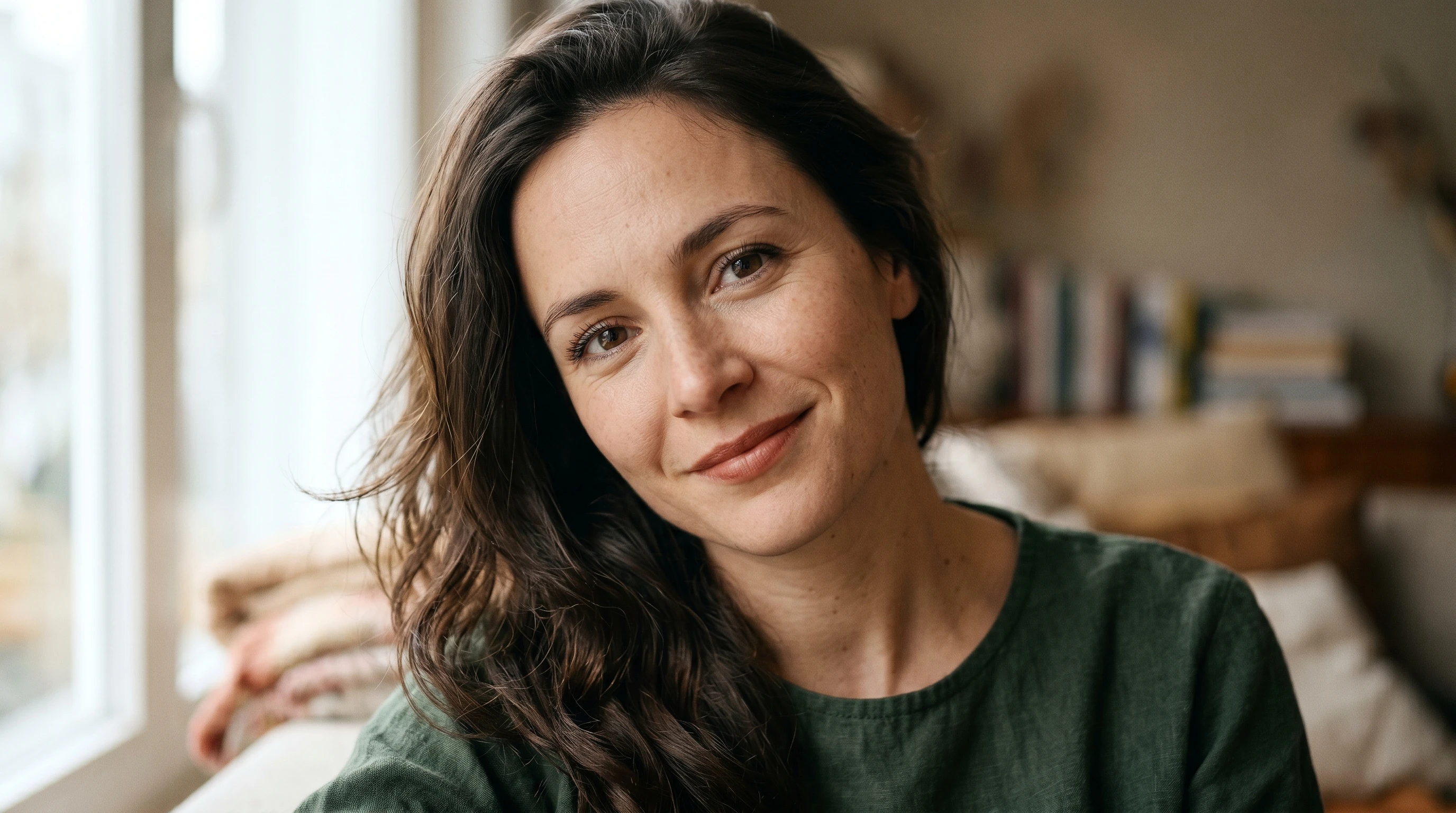
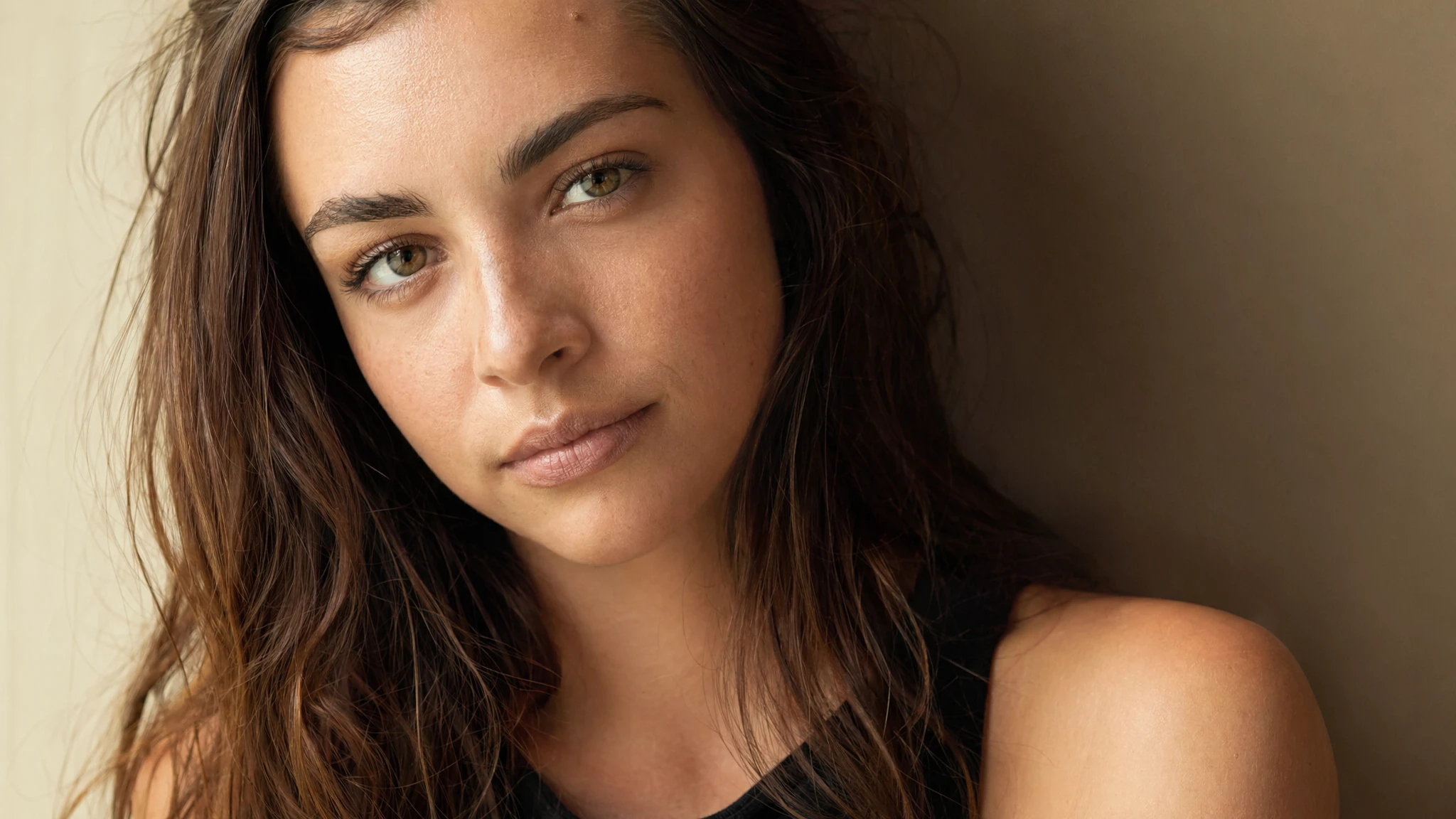
Prompt
A photorealistic editorial portrait of a woman in her early 30s, framed as a wide 16:9 cinematic shot with the subject placed slightly off-center on the left and natural negative space on the right. Soft natural window light from the left, shallow depth of field, neutral warm background, cinematic color grading, 85mm lens perspective, ultra-fine skin texture with visible pores and subtle freckles, natural makeup, hair gently falling across one shoulder. Aspect ratio 16:9.
Verdict: GPT Image 2 holds a slight overall edge — more neutral color rendering, stronger identity coherence, and the leaderboard top spot. Nano Banana 2 remains a strong choice when the brief calls for vibrant, editorial-style polish straight out of the box.
2. Text Rendering in Images
Generating legible, well-styled text within images — for posters, infographics, marketing mockups, and signs — is notoriously difficult for AI image models. We tested both models with prompts that required rendering specific text strings in multiple languages.
Nano Banana 2
Nano Banana 2 renders most short headlines, signs, and labels legibly across English, Chinese, Japanese, Korean, and Arabic. Its standout differentiator is in-image text translation: it can localize the text inside an existing image into another language while preserving the surrounding composition. Per the official model card, small body text at 1K resolution can still appear blurry, so dense layouts work best at 2K or 4K output.
GPT Image 2
GPT Image 2 currently delivers the highest text-rendering accuracy of any mainstream image model — independent reviewers report 99%+ character accuracy on first-attempt generations across English, Japanese, Korean, Chinese, Hindi, Bengali, Arabic, and Hebrew. The autoregressive architecture writes glyphs as vector shapes before rasterizing, so dense menus, packaging copy, multi-line poster typography, and small-font UI labels stay clean and correctly formed. This is the area where GPT Image 2's lead over Nano Banana 2 is largest.
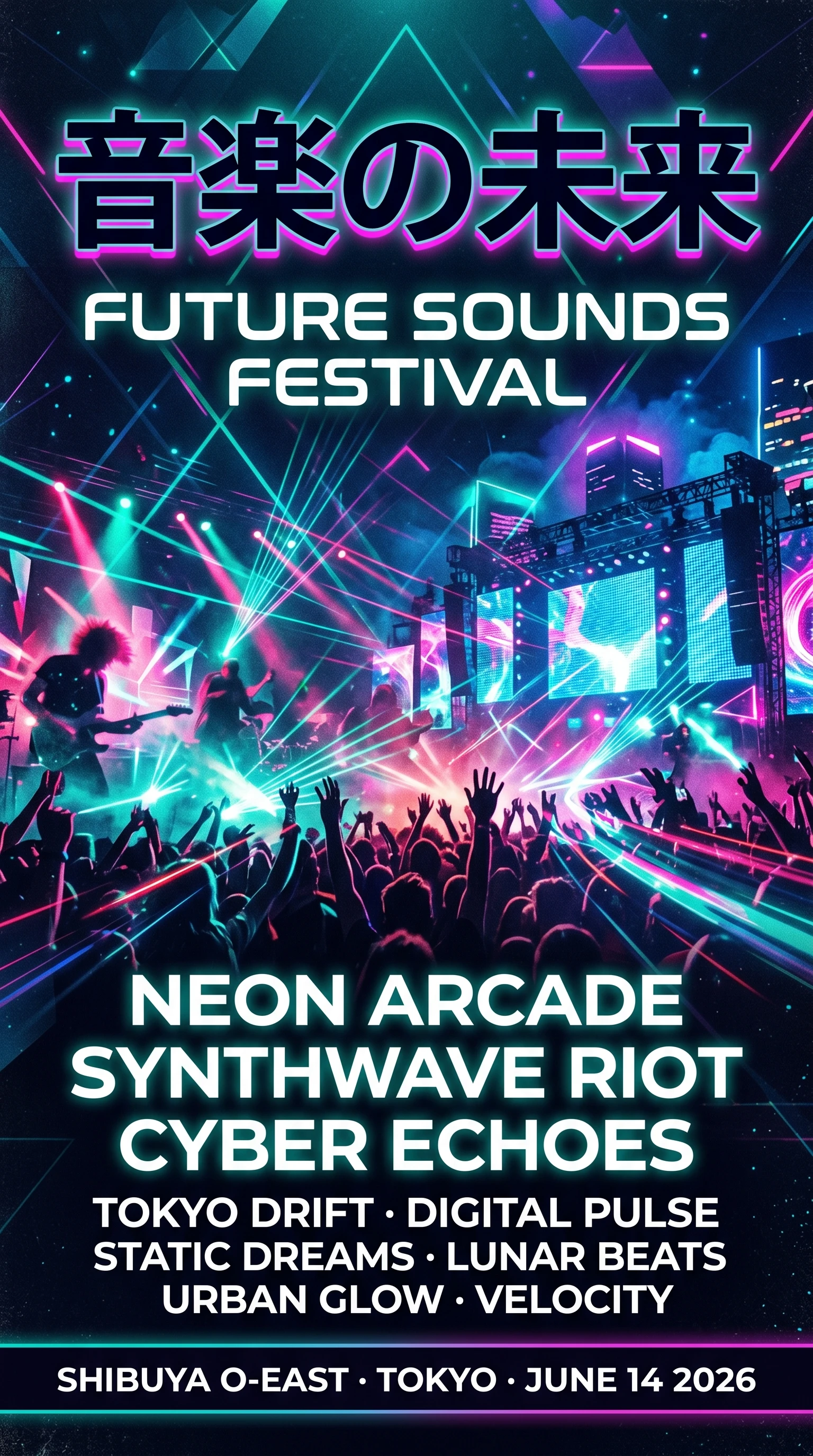
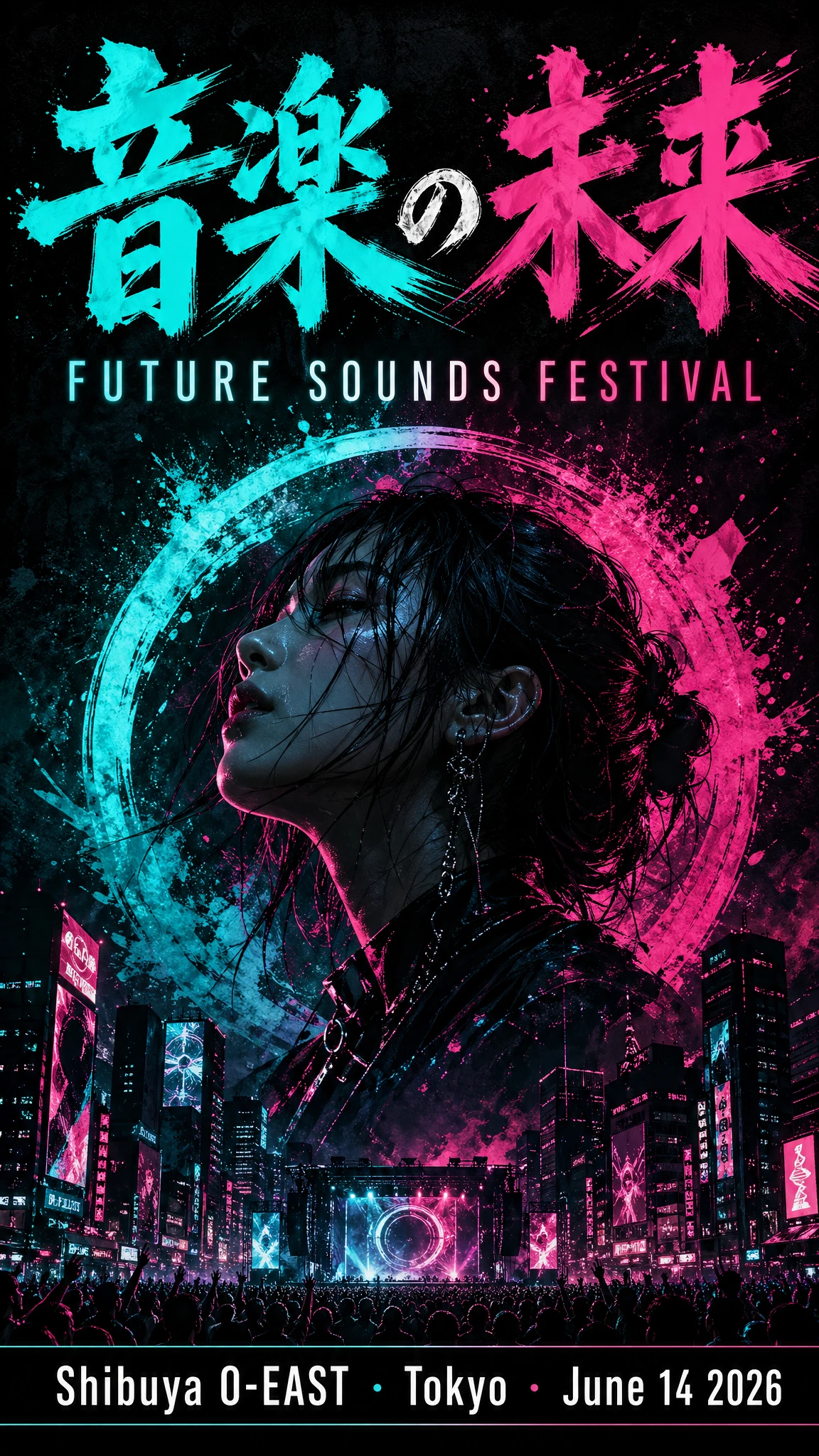
Prompt
A bold music festival poster, vertical orientation. Headline at the top in large brushstroke kanji: "音楽の未来". Directly below it in a clean geometric sans-serif: "FUTURE SOUNDS FESTIVAL". Bottom strip in smaller white type: "Shibuya O-EAST · Tokyo · June 14 2026". Dark background with electric teal and magenta neon glow effects. All text must be fully legible and correctly formed. Aspect ratio 9:16.
Verdict: GPT Image 2 wins on raw text accuracy and dense, multi-script layouts. Nano Banana 2 keeps a unique advantage in localizing text inside an existing image — a separate translation-driven use case where it remains the better tool.
3. Multi-character Scene Consistency
Maintaining consistent character appearances across multiple generated images — or across multiple characters in a single scene — is critical for storyboarding, brand campaigns, and serialized content. We prompted both models to generate the same characters in different scenes.
Nano Banana 2
Nano Banana 2 explicitly supports up to five distinct characters and fourteen tracked objects within a single workflow. Native subject tracking holds clothing, accessories, and proportions stable across composed scenes, and Google's documentation calls out multi-character consistency as a focus area for this release. The model card does note that reference-to-output identity isn't always perfect, and recommends verifying outputs for identity-critical work.
GPT Image 2
GPT Image 2 in thinking mode generates up to eight consistent images from a single prompt, holding characters, objects, and styles stable across the entire batch through its reasoning layer rather than reference fusion alone. In our tests it pulled ahead of Nano Banana 2 on multi-character runs: identity coherence stayed tight through six- to eight-image storyboards, and clothing, accessory, and facial-structure drift was visibly smaller than with Nano Banana 2's native tracking — particularly past the four- or five-character mark, where Nano Banana 2's reference fusion begins to soften. Identity-sensitive editing also makes targeted edits (swapping a background, retiming a scene) safer across a series without breaking face shape or outfit details.
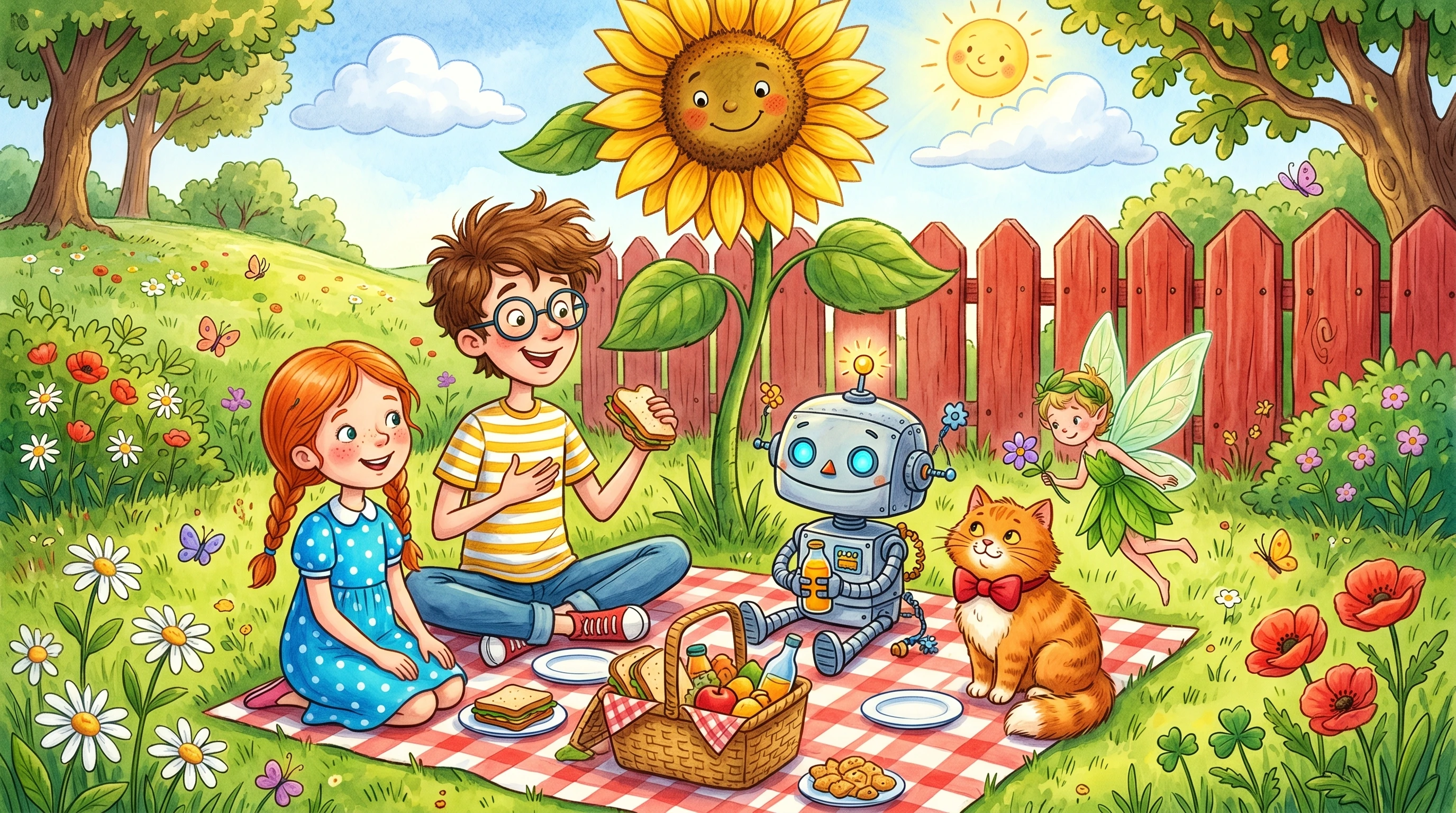
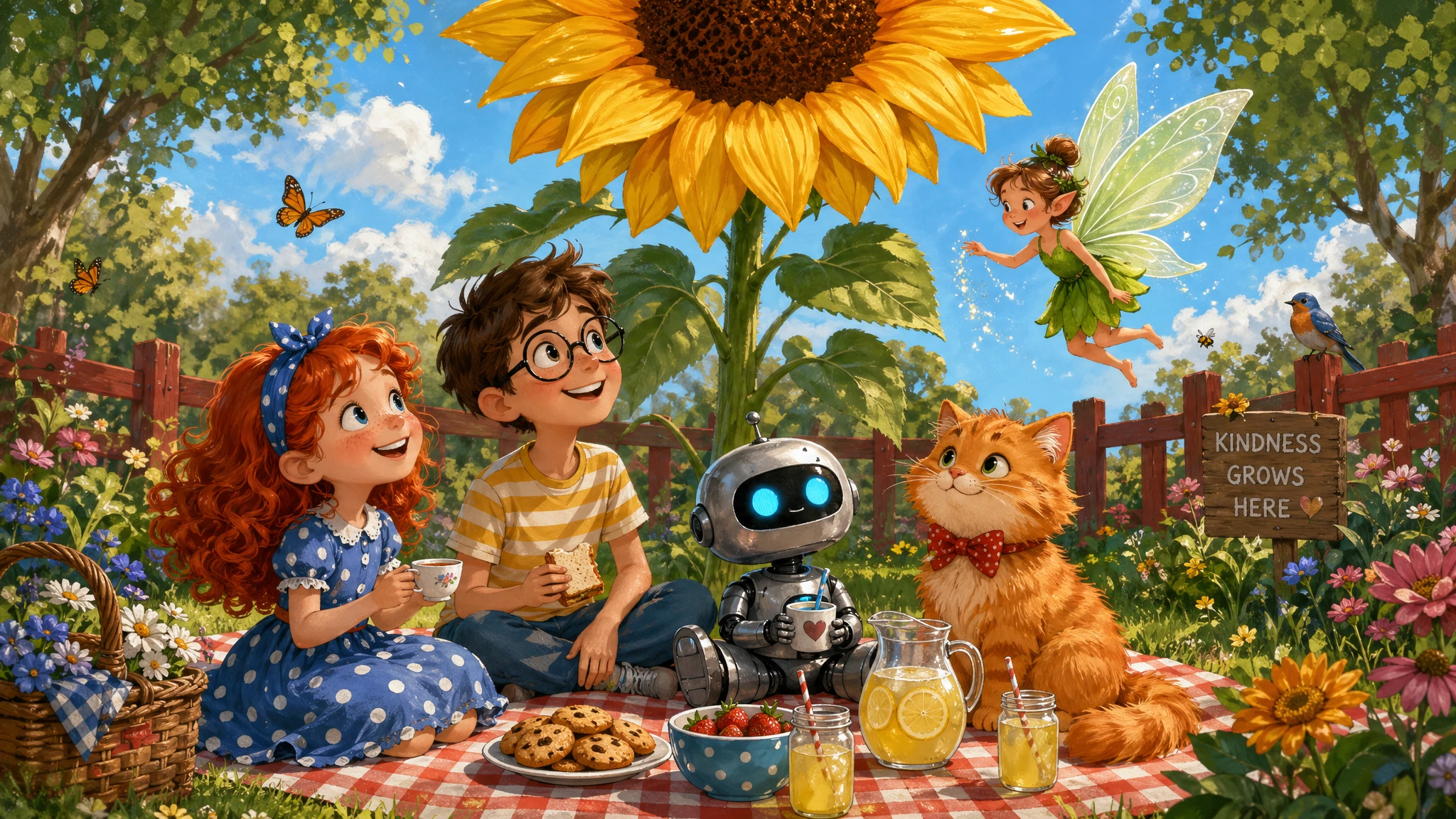
Prompt
A whimsical illustrated wide scene of five friends gathered at a sunny park: a red-haired girl in a blue polka-dot dress, a tall boy with round glasses and a yellow-and-white striped shirt, a small silver robot with glowing blue eyes, a fluffy orange cat wearing a red bow tie, and a tiny fairy with translucent green wings. They are arranged horizontally around a red-and-white checkered picnic blanket beneath a sunflower taller than them, with a barn-red fence in the background. Bright, joyful, storybook illustration style. The identity, outfit, and accessories of every character must remain clearly distinguishable and consistent. Aspect ratio 16:9.
Verdict: GPT Image 2 has the edge here. Thinking-mode batch consistency reaches up to eight images from a single call with measurably less identity drift than Nano Banana 2 in our tests, and identity-sensitive editing keeps follow-up edits coherent. Nano Banana 2's native five-character / fourteen-object tracking still holds up when the brief stays inside those limits.
4. Complex Scene Composition
Complex scenes — dramatic landscapes, architectural interiors, crowd scenes, multi-plane depth — test a model's ability to maintain spatial coherence, handle atmospheric effects, and manage competing visual elements without producing artifacts.
Nano Banana 2
Nano Banana 2 benefits from Google Search grounding when prompts involve real-world locations, brands, or visual references. The model can pull current visual data and recent product aesthetics into a composition, producing results that reflect the actual appearance of a landmark, retail space, or culturally specific scene rather than a generic approximation. Atmospheric warmth and material texture come through strongly by default.
GPT Image 2
GPT Image 2's thinking mode also runs live web search before rendering, and adds substantially stronger spatial reasoning on top. Strict layout constraints — grids, multi-pane compositions, ordered object placement, foreground-to-background hierarchy — are followed with architectural precision rather than treated as suggestions, a difference multiple independent reviewers have called out. Foreground-background separation is clean, atmospheric perspective is applied naturally, and identity-sensitive editing makes incremental changes to a complex scene without disturbing the rest of the composition.

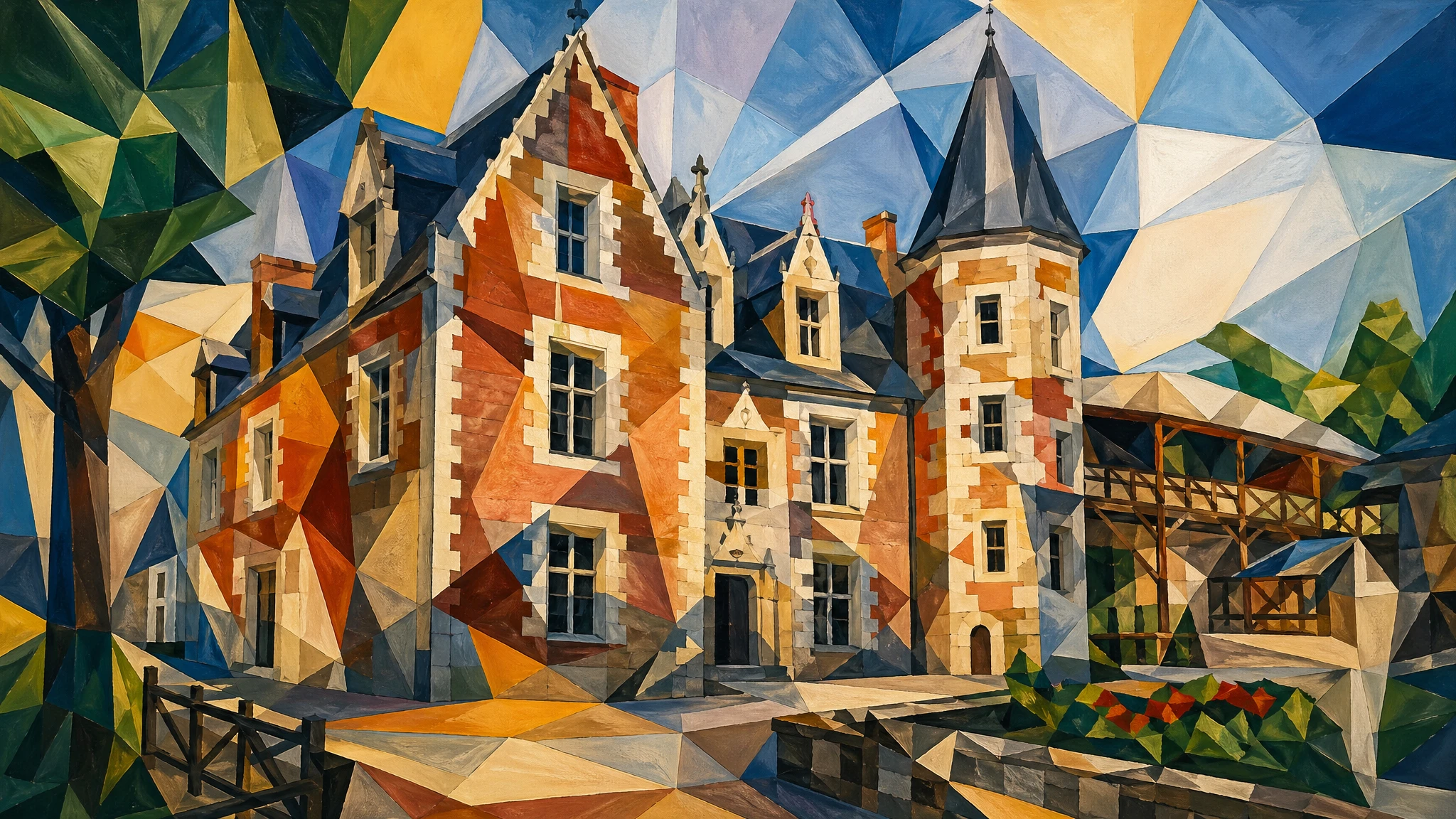
Prompt
Create a vivid image of the Museum Clos Lucé in Amboise, France — the historic Renaissance manor where Leonardo da Vinci spent his final years. The building features a red-brick and cream-stone facade, a steep slate roof, prominent dormer windows, and a distinctive corner turret with a conical cap. Render it in the style of bright-colored Synthetic Cubism — fragmented geometric planes, overlapping perspectives, bold flat colors, sharp angular shadows. Aspect ratio 16:9. No text.
Verdict: GPT Image 2 has the slight edge — both models can ground in real-world references via web search, but its spatial logic and adherence to rigid layout instructions are stronger. Nano Banana 2 is a strong fallback for atmospheric, photorealistic real-world locations where vibe matters more than strict structure.
5. Artistic Style Control
Style transfer and artistic rendering — oil painting, watercolor, graphic novel, anime, neon cyberpunk, minimalist illustration — test how accurately a model interprets and maintains stylistic intent across diverse prompts.
Nano Banana 2
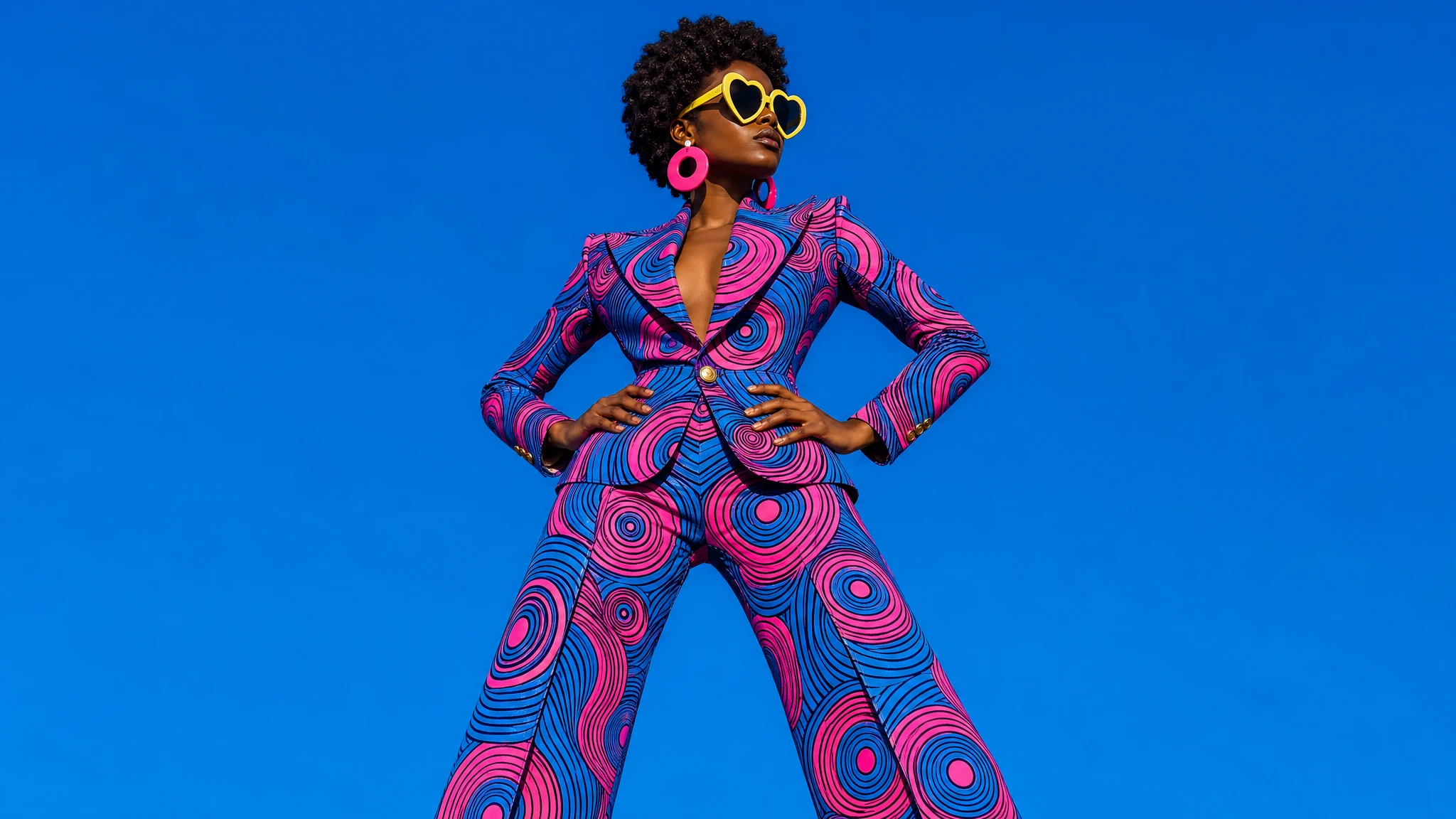
Nano Banana 2 produces rich stylistic outputs with strong visual punch. Painterly and cinematic styles tend to land with deeper tonal range and slightly pushed saturation, giving covers and editorial visuals an extra layer of impact. Lighting carries cinematic warmth across most styles by default — useful for music artwork, campaign visuals, and any brief that prizes vibe over restraint.
GPT Image 2
GPT Image 2 covers more than 50 recognized artistic styles and adheres to style descriptors with noticeably tighter precision. Pop art, halftone print, flat vector, oil, watercolor, manga, pixel art, and noir cinematic stills all execute cleanly without drifting toward a generic "AI aesthetic" — a common failure mode in earlier generations. Edge control on graphic styles is sharper, and the eliminated yellow cast keeps neutral palettes neutral when the brief calls for them.
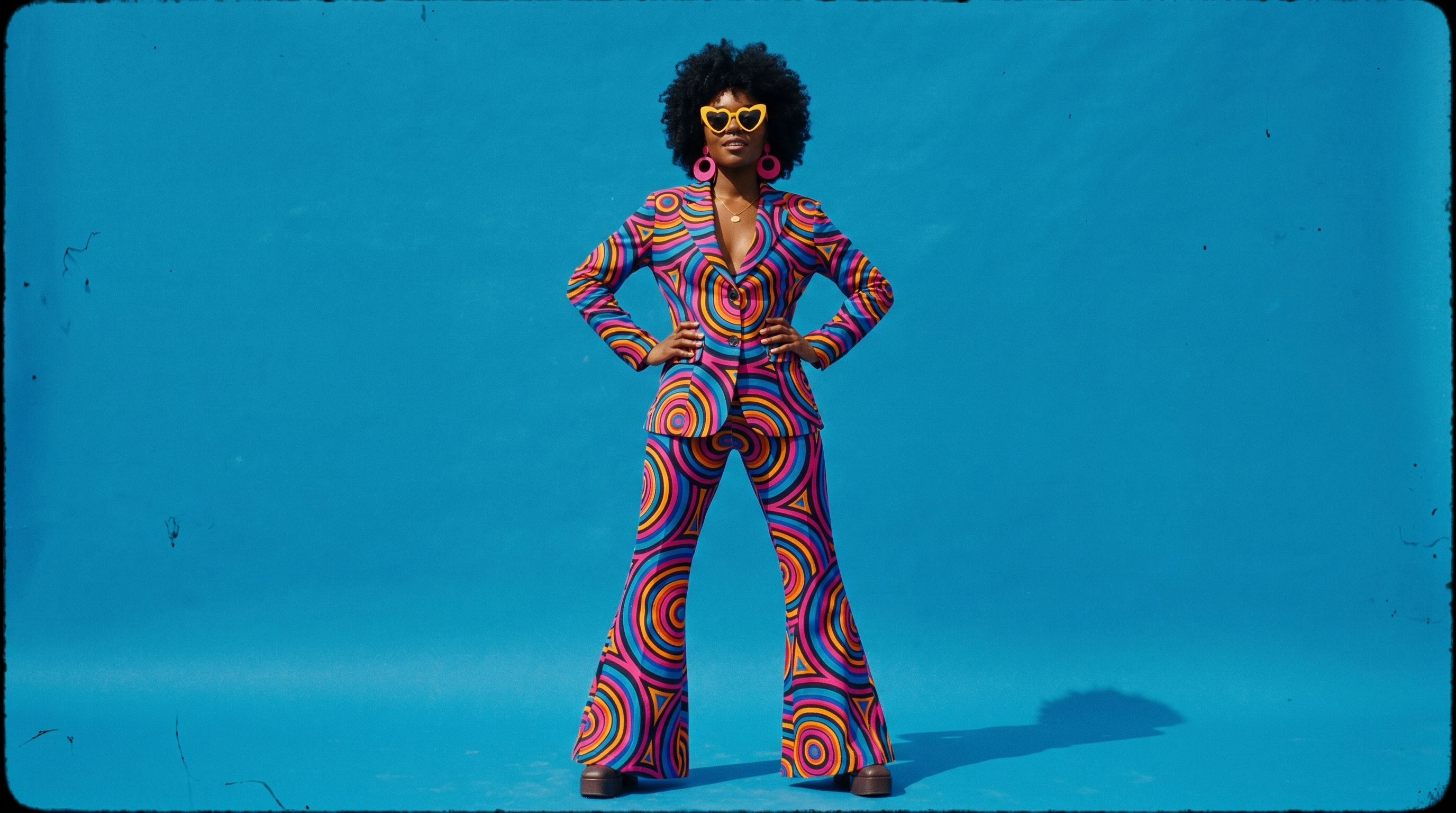
Prompt
Cinematic still in a highly stylized pop art aesthetic, framed as a wide 16:9 fashion editorial. A young dark-skinned person with tightly coiled hair wearing an audacious tailored suit — the fabric covered in swirling electric blue and hot pink concentric circle patterns. Wide-leg bell-bottom trousers with sharp creases. Heart-shaped yellow sunglasses. Large pink circular earrings. Hands on hips, confident pose. Subject placed slightly off-center with bold graphic negative space on one side. Solid cerulean blue background. Camera slightly low-angle. Bold, graphic, unapologetically maximalist. Aspect ratio 16:9.
Verdict: GPT Image 2 has a slight edge for breadth of styles and faithfulness to specified instruction. Nano Banana 2 still earns its place when the brief favors a vibrant, punchy painterly look over neutral instruction-following.
6. Infographic and Data Visualization
Creating infographics, diagrams, charts, and educational visuals requires a model to combine accurate layout, readable text, meaningful icons, and coherent information hierarchy — all in a single image.
Nano Banana 2
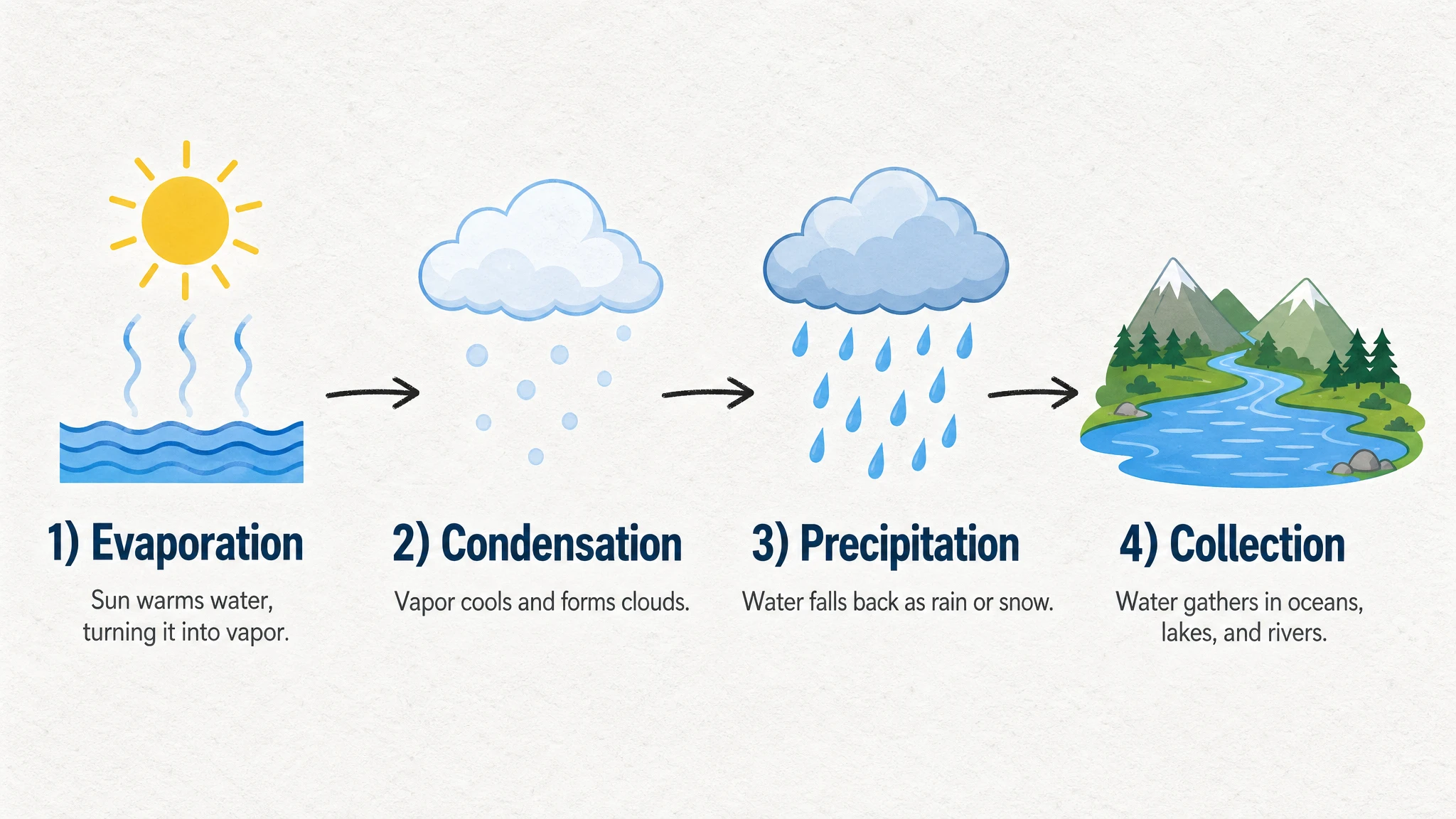
Nano Banana 2's web search grounding lets it pull real statistics, geographic data, and current information directly into visual form — useful for infographics where factual accuracy matters as much as layout. Diagram, recipe, and structured-visual generation are explicit focus areas in Google's documentation, and the model holds up well on standard educational layouts when typographic density stays moderate.
GPT Image 2
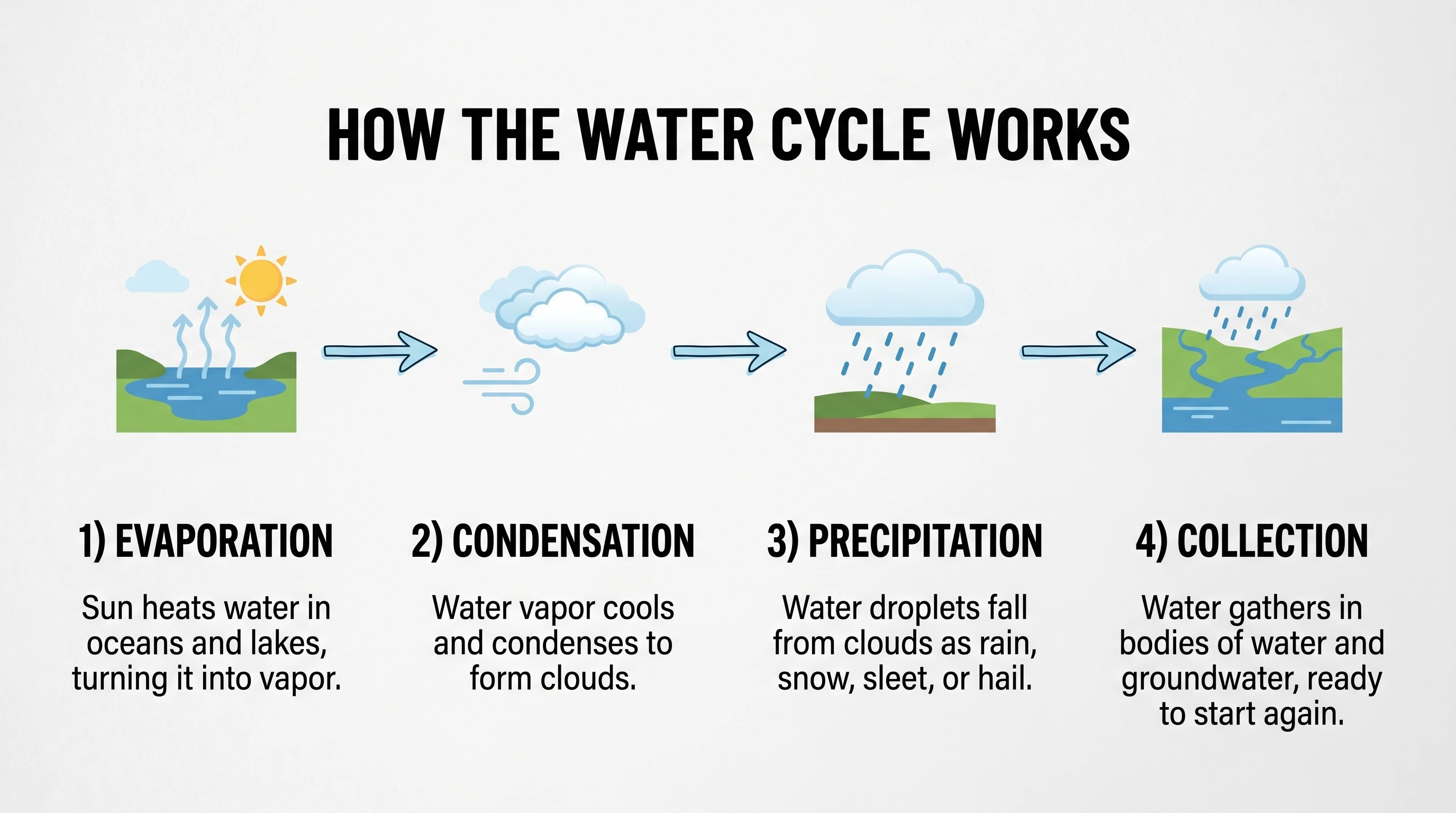
GPT Image 2 combines the same web-search grounding (in thinking mode) with the strongest text rendering and the strongest layout adherence in the category. Numbered steps, dense labels, axis text, callouts, legends, and arrow connectors stay legible and correctly placed in a single generation. Independent reviewers describe GPT Image 2 as the only production-ready choice for infographics where typographic detail and layout precision both have to be right on the first attempt.
Prompt
A clean educational infographic explaining how the water cycle works, laid out as a wide 16:9 horizontal banner. The visual story flows from left to right in four clear steps: 1) Evaporation, 2) Condensation, 3) Precipitation, 4) Collection. Each step has a bold numbered label, a simple flat icon above it, and a one-line description below. Steps connected by clean hand-drawn horizontal arrows. Soft light-gray textured background. Modern flat design with clear typographic hierarchy. No decorative clutter. Aspect ratio 16:9.
Verdict: GPT Image 2 has a slight edge — same factual grounding, plus stronger text rendering and layout precision. Nano Banana 2 stays a credible option for educational diagrams where vibrant visuals matter more than dense typography.
Summary: Image Quality Comparison
| Dimension | Nano Banana 2 | GPT Image 2 | Winner |
|---|---|---|---|
| Photorealistic Portrait | Vibrant, editorial polish | Neutral realism, leaderboard #1 | GPT Image 2 (slight edge) |
| Text Rendering | Legible + in-image translation | 99%+ accuracy across 8+ scripts | GPT Image 2 |
| Multi-character Consistency | Native 5-char / 14-object tracking | Up to 8-image batch in thinking mode | GPT Image 2 (slight edge) |
| Complex Scene Composition | Real-world grounding, atmospheric | Same grounding + stronger spatial logic | GPT Image 2 (slight edge) |
| Artistic Style Control | Vibrant painterly depth | Tighter style adherence across 50+ styles | GPT Image 2 (slight edge) |
| Infographic & Data Visualization | Factually grounded data visuals | Grounded + best text + best layout | GPT Image 2 (slight edge) |